Login

Skyview  >  Login

China Top 10 Aluminum Clad Wood Windows Suppliers

Choosing reliable aluminum clad wood windows suppliers requires more than comparing attractive product photos. This guide introduces China’s top 10 manufacturers through practical evaluation criteria, including production experience, material quality, customization ability, and export performance. It focuses on suppliers serving residential, commercial, and high-end architectural projects.

Real performance appears in small details. Check the aluminum alloy grade, wood species, coating system, drainage design, and hardware options. A well-built window should close smoothly, resist moisture, and maintain stable insulation across changing seasons. Factory visits, product samples, test reports, and client references can reveal more than polished brochures.

Evidence matters.

The featured companies are assessed through available certifications, manufacturing capabilities, quality-control procedures, and communication standards. We also consider whether suppliers explain lead times, packaging methods, installation guidance, and warranty coverage clearly. These factors can reduce risks during international purchasing and project delivery.

However, no supplier is perfect for every project. A manufacturer experienced in standard windows may struggle with unusual shapes or strict passive-house requirements. Some online information may also be incomplete or outdated. Buyers should verify current certificates, factory details, technical drawings, and commercial terms before placing an order. This article is a practical starting point, not a substitute for due diligence. Its purpose is to help architects, contractors, distributors, and property developers compare Chinese suppliers with greater confidence and clearer expectations.
China Top 10 Aluminum Clad Wood Windows Suppliers

What Are Aluminum-Clad Wood Windows?

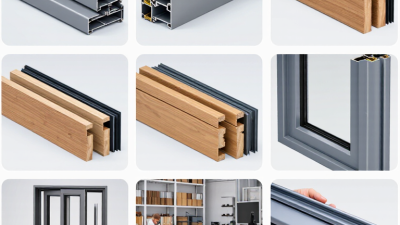
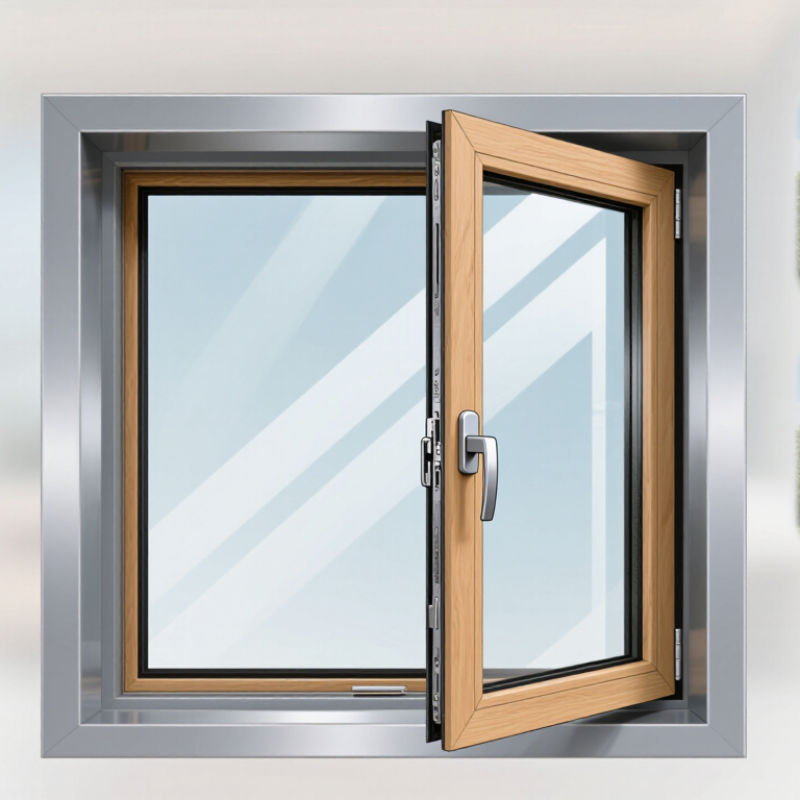
Aluminum-clad wood windows combine a solid timber interior with a protective aluminum exterior. The wood frame brings warmth, insulation, and a natural surface that can be stained or painted. The aluminum shell faces rain, ultraviolet light, and changing temperatures. It is shaped outside the building. Usually, manufacturers bond or mechanically attach the cladding to the wood frame, leaving drainage paths for moisture. Quality depends on timber species, coating systems, corner joints, seals, and glass packages. A beautiful profile means little if water enters behind the cladding.

For buyers comparing China’s top aluminum-clad wood window suppliers, factory evidence matters more than polished photographs. Ask for section drawings, thermal data, air and water test reports, coating specifications, and installation guidance. Request samples with operable hardware. A small sample can reveal rough joints, weak gaskets, or uneven finishes. Experienced suppliers should explain wood moisture control, drainage design, glass selection, and replacement-part support. Look for recognized testing methods and traceable production records. Do not judge performance from U-values alone. Installation quality, local climate, orientation, and maintenance can change the result. Some projects need slimmer frames; others need stronger weather resistance. The right choice is not always the most expensive. This point deserves more checking. A supplier may offer excellent windows but limited after-sales support in your region. That gap can become costly years later.

Key Features and Performance Standards

For China’s top aluminum clad wood window suppliers, performance should lead the comparison, not catalog appearance. The U.S. Department of Energy reports that windows can represent 25–30% of residential heating and cooling energy use. A well-designed unit therefore needs a low U-factor, suitable solar heat gain control, and continuous weather seals. Details matter.

Aluminum protects the exterior from rain, ultraviolet exposure, and impact. The timber core adds insulation and a warmer interior surface. However, the connection between both materials deserves close inspection. Thermal breaks, drained cavities, gasket quality, and corner joints often decide real performance. NFRC certification provides independently verified U-factor, solar heat gain coefficient, visible transmittance, and air leakage values. These figures are more useful than marketing claims.

Suppliers should also show testing against recognized standards, such as EN 14351-1 or relevant national requirements. Air leakage, water penetration, wind resistance, and operational durability need documented test conditions. The American Architectural Manufacturers Association’s performance testing framework is widely used for fenestration evaluation. A low U-factor alone can mislead. Poor installation may create drafts, condensation, or movement around the frame. Field experience suggests checking sample corners, hardware alignment, finish thickness, and drainage paths before ordering. Not every supplier publishes complete data. That is a weakness worth questioning. Thermal performance also varies by glass package, spacer, size, and installation method, so one laboratory result cannot represent every project.

This reference index summarizes the main technical dimensions used when evaluating aluminum-clad wood windows in international projects. It is based on commonly specified criteria such as thermal insulation, air leakage, water resistance, structural performance, solar control, acoustic insulation, coating durability, and material quality. The index is a comparison framework, not a supplier ranking or certification result.

How to Evaluate Chinese Window Suppliers

China Top 10 Aluminum Clad Wood Windows Suppliers

How to Evaluate Chinese Window Suppliers

A strong supplier evaluation starts beyond photographs and low quotations. The International Energy Agency’s Buildings 2023 report states that buildings consume about 30% of global final energy. Therefore, window performance deserves careful verification. Ask for tested U-values, air leakage, water resistance, and wind-load results. Reports should identify the exact product configuration, not a similar model.

Check whether testing follows recognized standards, such as EN 14351-1, ASTM E283, ASTM E331, or ASTM E330. Review the aluminum alloy, thermal-break material, timber species, coating system, and adhesive details. A factory audit should examine moisture control, CNC accuracy, paint rooms, glass storage, and final inspection records. ISO 9001 certification can support process discipline, but it does not prove excellent window performance. That distinction matters.

Tips: Request one complete production sample. Measure frame dimensions, corner joints, drainage paths, hardware movement, and finish consistency. Ask for batch traceability and a written warranty. Compare the sample with the approved drawings before mass production. Shipping experience also matters; wood packaging, humidity exposure, and container loading can damage quality. No checklist is perfect. A polished showroom may still hide weak process control, while a modest factory may deliver reliable work. Recheck assumptions. Ask for recent project references, independent reports, and clear corrective-action records.

China Top 10 Aluminum Clad Wood Windows Suppliers - How to Evaluate Chinese Window Suppliers

Rank Evaluation Dimension Recommended Benchmark Evidence to Request Weight Score
1 Thermal Performance Target whole-window U-value of ≤ 1.3 W/m²K for cold-climate projects, subject to glass, size, and test method. Independent NFRC, EN, or equivalent thermal test report showing frame, glass, spacer, and installation assumptions. 20% __/20
2 Air, Water, and Wind Resistance Performance should be tested to the destination market’s applicable window standard, with project-specific size and configuration considered. Test reports for air leakage, water penetration, and structural or wind-load resistance from an accredited laboratory. 15% __/15
3 Wood Species and Moisture Control Kiln-dried, laminated wood with documented moisture control; many manufacturers target approximately 8–12% moisture content before assembly. Wood species list, moisture-control records, finger-joint or lamination details, and quality inspection procedures. 12% __/12
4 Aluminum Cladding and Finish Cladding should provide continuous weather protection, controlled drainage, and a durable powder-coat or anodized finish suitable for the exposure class. Aluminum alloy and thickness data, coating specification, color tolerance policy, drainage drawings, and finish warranty. 10% __/10
5 Glass and Hardware Configuration Insulating glass should be selected according to climate, solar exposure, acoustic requirements, and local safety regulations. Glass build-up, low-emissivity coating location, spacer type, gas-fill option, hardware load rating, and replacement policy. 10% __/10
6 Quality Management A documented quality system should control incoming materials, dimensional accuracy, assembly, glazing, packaging, and final inspection. Current quality-management certificate, inspection checklist, nonconformity procedure, and sample batch inspection records. 8% __/8
7 Compliance and Certification Support The supplier should match documentation to the destination market, such as EN 14351-1, NFRC, AAMA/WDMA, CSA, or applicable local requirements. Product declarations, laboratory accreditation details, installation instructions, safety documentation, and market-specific compliance files. 8% __/8
8 Customization and Engineering Capability A capable supplier should provide shop drawings, section details, color matching, opening options, unusual sizes, and installation interfaces. Previous non-confidential drawings, CAD or BIM capability, engineering-change process, prototype procedure, and technical response time. 7% __/7
9 Lead Time and Export Logistics For customized orders, a practical planning range is commonly 6–12 weeks after drawing approval, subject to quantity, glazing, finishes, and production capacity. Written production schedule, packaging specification, container-loading plan, Incoterms, export references, and delay-management process. 5% __/5
10 Warranty, Service, and Total Cost Compare the complete delivered cost, including packaging, shipping, duties, installation interfaces, spare parts, warranty coverage, and after-sales response. Itemized quotation, warranty terms, exclusions, spare-parts list, claim procedure, service-level commitment, and customer references. 5% __/5
Total Evaluation Score 100% __/100
Evaluation note: The benchmarks above are procurement reference points, not claims about any individual supplier. Final selection should be based on current, independently verifiable test reports, approved drawings, physical samples, factory inspection, and project-specific requirements.

China’s Top 10 Aluminum-Clad Wood Window Suppliers

China’s Top 10 Aluminum-Clad Wood Window Suppliers should be assessed through evidence, not attractive catalogs. The strongest suppliers usually show tested U-values, air-tightness results, water resistance, and documented production controls. These details matter because the International Energy Agency reports that buildings consume about 30% of global energy demand. Better window design can reduce heat loss around cold glass edges.

A practical review should examine timber moisture levels, aluminum coating thickness, thermal breaks, glazing specifications, and hardware durability. Suppliers with in-house testing facilities can provide clearer batch records and installation guidance. The 2023 World Bank Logistics Performance Index also highlights delivery reliability as a key trade factor, especially for overseas construction schedules. Certification alone is not enough.

A ranking is never perfect. Some factory claims remain difficult to verify. Buyers should request recent test reports, project references, sample sections, and video inspections before selecting from China’s Top 10 Aluminum-Clad Wood Window Suppliers. Grand View Research identifies energy efficiency and renovation demand as important market drivers in its recent windows and doors analysis. However, a premium profile does not guarantee performance. Small details matter: a compressed gasket, uneven corner joint, or poorly sealed sill can weaken an otherwise advanced window. Experienced buyers should compare verified results under matching standards, not rely on showroom appearance.

Buying Considerations for International Projects

China Top 10 Aluminum Clad Wood Windows Suppliers

Buying Considerations for International Projects

For international projects, supplier selection should begin with performance evidence, not attractive catalog images. Ask each shortlisted supplier for test reports covering air leakage, water penetration, wind load, thermal transmittance, and sound insulation. Reports should match the proposed window system, glass package, and size. A small sample can hide large risks.

Confirm the intended standards before requesting quotations. European, North American, Australian, and Middle Eastern projects may require different calculations, labels, and installation details. Check whether the supplier can provide signed drawings, material declarations, warranty terms, and replacement-part support in English. Review the aluminum finish, wood moisture content, drainage paths, seals, hardware cycle testing, and glass edge protection. These details matter after months of sun, rain, dust, and temperature changes.

Request a full-size mock-up when the façade is complex. Test the corner, sill, flashing, and wall connection, not only the center panel. Confirm packaging for sea transport, container loading, insurance responsibility, and realistic production dates. A low quotation may exclude screens, trims, special glass, or local taxes. It may also ignore site tolerances. That is easy to miss. I have seen technically strong windows perform poorly because installers lacked clear shims and drainage instructions. Require a method statement and remote or on-site training. Keep an independent consultant involved, because supplier documents deserve verification, not blind trust.