Why Choose Front Doors With Windows for Global Sourcing?
Why Choose Front Doors With Windows for Global Sourcing?
Global buyers are choosing front doors with windows for more than appearance. These doors can bring daylight into a dark foyer, improve street visibility, and create a warmer entrance experience. A frosted sidelight may soften harsh sunlight. Low-emissivity glass can also support better thermal control when specified correctly.
Performance still matters most. Joseph Lstiburek, a respected building scientist, often emphasizes a simple warning: “Water is the enemy.” His point is highly relevant to front doors with windows. A poorly sealed frame can allow rain into the threshold, especially during wind-driven storms. Buyers should review glass type, drainage design, weather seals, hardware quality, and installation instructions before comparing prices.
Details reveal the real value.
A reliable sourcing process checks samples, factory records, test reports, and packaging strength. It also considers climate differences between the supplier and the final market. A door suitable for a dry inland region may perform differently near a humid coast. Local building requirements should be confirmed by qualified professionals, not assumed from a supplier catalogue.
The attractive sample may still mislead. Color can change under showroom lighting. Glass may look clear but offer limited privacy. Even strong products can fail after careless installation. Therefore, global sourcing should balance design, verified performance, lead time, and service support. The best front doors with windows are not simply beautiful. They are carefully specified, honestly evaluated, and prepared for real weather.
What Are Front Doors With Windows and How Are They Designed?
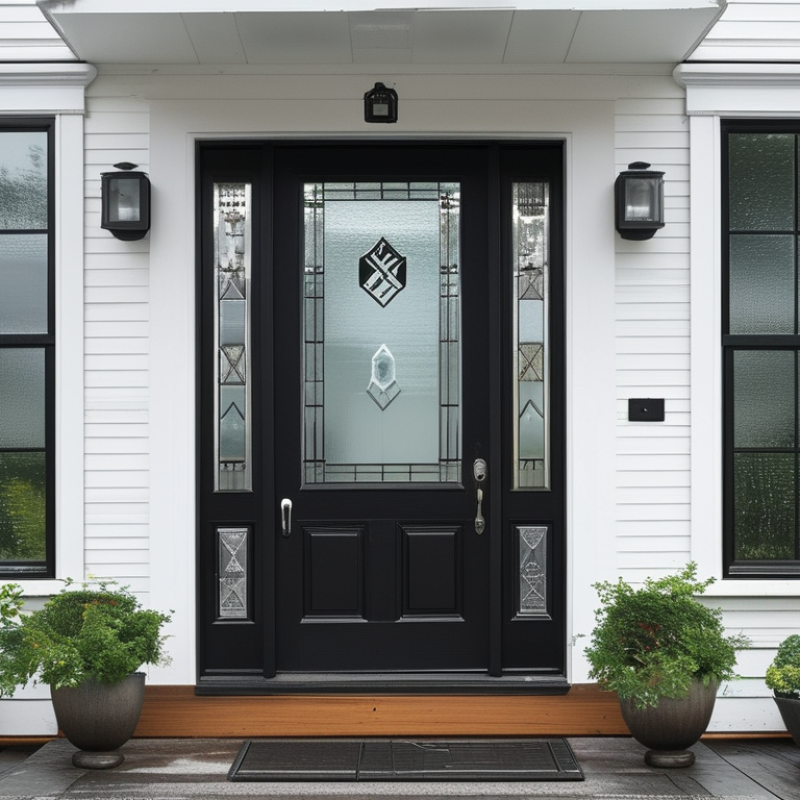
Front doors with windows are entry doors that combine a solid door panel with one or more glazed sections. The glass may sit near the top, beside the handle, or across most of the door. Designers use these openings to bring daylight into dark hallways and improve the entrance’s visual connection with the exterior. A small pane can brighten a narrow foyer. A full-height panel creates a more open impression.
Their design begins with structure and performance. The door slab needs a stable core, while the frame must support the glass without bending or leaking. Tempered or laminated safety glass is commonly selected for impact resistance. Clear glass offers visibility, but frosted, textured, or screened glass gives better privacy. Weather seals around the frame help block rain, dust, and drafts. Hardware placement also matters. A handle positioned too close to the glazing may feel awkward during daily use.
Details vary by climate and local building requirements. Sourcing teams should check glass specifications, thermal performance, drainage, packaging strength, and installation instructions before approving samples. A beautiful sample can still fail after long-distance shipping. That part is often underestimated. Larger windows may increase weight and breakage risk, while darker frames can become hot in strong sunlight. I would test the complete door assembly, not only the glass, because hinges, seals, and alignment often reveal weaknesses first.
How Do Windowed Front Doors Improve Light, Visibility, and Curb Appeal?
Why Choose Front Doors With Windows for Global Sourcing?
How Do Windowed Front Doors Improve Light, Visibility, and Curb Appeal?
Windowed front doors can make a dim entryway feel noticeably more welcoming. Morning light reaches the foyer, reducing the need for electric lighting. Clear or lightly textured glass also lets residents check the porch before opening the door. This small visibility benefit can improve daily comfort and confidence. From the street, glass panels add proportion, depth, and visual detail. A plain entrance may appear closed off, while a balanced window design can make the façade feel more approachable.
Tips: Match the glass size to the door’s width. Use textured or frosted glazing when privacy matters. Ask suppliers for tested thermal and weather-seal data. During sourcing, inspect sample frames, hinges, seals, and glass edges. These details often reveal more than attractive product photos.
Performance still requires careful judgment. Large glass areas may increase heat gain, glare, or indoor visibility. In colder regions, weak insulation can create a chilly patch near the entrance. Local daylight direction matters too. A south-facing door may need stronger solar control than a shaded entrance. I have seen attractive designs fail when hardware alignment was overlooked. That is an avoidable mistake, but it happens. Buyers should compare safety glazing, impact resistance, drainage, and installation tolerances before placing a global order. A windowed door should brighten the home without making comfort, privacy, or durability an afterthought.
Which Materials, Glass Types, and Security Features Should You Choose?
Front doors with windows can improve daylight, ventilation, and street appeal, but the specification needs careful control. For global sourcing, choose materials according to climate, maintenance capacity, and shipping conditions. Fiberglass resists moisture and dents, while aluminum offers a slim frame and good dimensional stability. Wood feels warm and authentic, yet it needs reliable coatings and regular maintenance. uPVC can perform well in wet climates, but color and reinforcement quality require close inspection. A perfect material does not exist.
Glass selection should match both comfort and security goals. Tempered glass breaks into small fragments, reducing sharp edges after impact. Laminated glass usually offers better resistance because its inner layer holds broken pieces together. Insulated glass can reduce heat transfer and outside noise, especially when paired with low-emissivity coatings. Ask for glass thickness, spacer details, and performance reports. Do not rely on appearance alone. A sample may look excellent but reveal weak seals after temperature changes.
Security depends on the complete door system, not the glass alone. Consider a reinforced frame, multi-point locking, protected hinges, and a cylinder suited to local requirements. The window should sit firmly within the sash, with no excessive movement or exposed fixing points. Request testing for water penetration, air leakage, wind pressure, and forced-entry resistance where applicable. Check regional building codes before production. Packaging also matters; damaged corners can turn a strong design into a costly replacement. Some sourcing decisions remain imperfect, so record tolerances and inspect a pre-production sample carefully.
How Can Global Buyers Evaluate Suppliers and Customization Options?
When sourcing front doors with windows, global buyers should assess the supplier before discussing finishes.
Request factory photos, production records, and recent inspection reports. A reliable supplier should explain frame materials, glass standards, hardware grades, and weather-sealing methods clearly. Ask for samples or a small trial order.
Real product evidence matters more than polished catalog images.
Customization needs a written specification.
Confirm opening size, glazing type, window position, swing direction, threshold height, color, and packaging method. Ask how the supplier controls tolerance during cutting and assembly.
For example, a 3 mm mismatch can complicate installation on site. Check whether drawings require buyer approval before production.
Also compare lead times, replacement policies, export experience, and communication response times. Fast replies are useful, but technical accuracy matters more.
A practical evaluation may include three suppliers. Score quality, documentation, customization flexibility, and total landed cost separately.
Request a pre-shipment inspection with photos of corners, seals, hinges, and glass edges.
Do not rely only on the lowest quotation.
It may exclude reinforced packaging or testing. I have found that unclear responsibility causes more delays than manufacturing itself.
Still, inspection cannot reveal everything. Humidity, handling, and installation skills may affect performance after delivery. Buyers should record these risks and revise their checklist after each project.
What Steps Ensure Successful Ordering, Inspection, and International Delivery?
Why Choose Front Doors With Windows for Global Sourcing?
Ordering front doors with windows internationally requires more than comparing prices. Begin with a precise specification sheet. Include opening size, frame material, glass type, swing direction, finish, hardware, and insulation requirements. Request technical drawings before paying a deposit. Small measurement errors can make installation expensive.
Ask the supplier for production samples, test reports, and clear tolerances. A pre-production sample helps confirm color, grain, glass clarity, and hinge placement. During inspection, check dimensions, surface defects, sealant lines, locking operation, and window stability. Photograph every inspected side. A qualified third-party inspector can provide an independent report, although this adds cost and time. It is usually worthwhile.
Packaging deserves careful attention. Use corner protection, moisture barriers, internal bracing, and shock indicators where appropriate. Confirm carton markings and shipping labels before dispatch. Review the commercial invoice, packing list, origin details, and transport terms with a qualified logistics professional. Check destination requirements for glazing, fire performance, energy efficiency, and import documentation. Rules vary by market.
I once underestimated port delays. The door arrived safely, but the installation schedule suffered. Build buffer time into the order. Track the shipment, insure the cargo, and inspect the package immediately after delivery. Record damage before signing final receipt. Mistakes still happen. Clear evidence makes correction more practical.
Why Choose Front Doors With Windows for Global Sourcing?
Key checkpoints for ordering, inspecting, and delivering windowed front doors internationally
A successful international order should verify product specifications, glazing and hardware details,
packaging protection, export documentation, and arrival condition. Windowed front doors can improve
daylight and curb appeal, while structured checks help reduce damage, specification errors, and customs delays.