Top 5 Drainage Geonet Tips for Global Buyers at Canton Fair 2026?
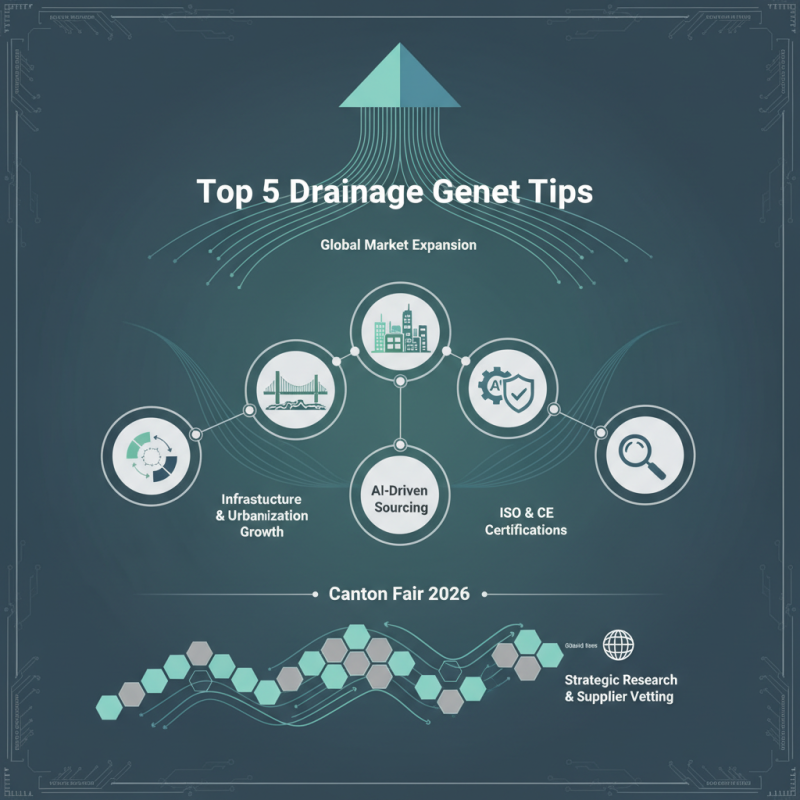
As the global market for drainage solutions expands, the demand for specialized materials like Drainage Geonet continues to rise. According to recent industry reports, global demand for geosynthetics is projected to grow by 5.5% annually through 2028. This growth is driven by increasing infrastructure projects and a surge in urbanization.
Attending the 2026 Canton Fair offers an invaluable opportunity for buyers interested in Drainage Geonet. The fair will feature cutting-edge technologies, including AI-driven navigation tools that streamline the sourcing of qualified suppliers. With both ISO and CE certifications becoming essential for global trade, buyers must be strategic in their choices.
However, navigating such a large event can be overwhelming. With over 1.55 million square meters of exhibition space, finding the right suppliers requires preparation and strategic planning. This is where understanding product features and supplier credentials becomes crucial. Many buyers still underestimate the importance of thorough research before the fair. With the right approach, global buyers can maximize their success at this significant event.
Essential Features to Look for in Drainage Geonets at Canton Fair
When attending the Canton Fair in 2026, it's essential to know what to look for in drainage geonets. These products play a crucial role in managing water flow and preventing soil erosion. Buyers should focus on material durability and tensile strength. High-quality geonets should withstand harsh weather and mechanical stress.
Another key feature is permeability. A drainage geonet’s ability to allow water flow impacts its effectiveness. Check the mesh size; it should balance water drainage and soil retention. Thin meshes may not handle heavy rain. Thick meshes may trap soil particles.
As you navigate the fair, look for certifications. Not all products meet industry standards. Some may look appealing but lack quality. Quality assessment is vital. Engage with manufacturers and ask for product samples. This opportunity allows for tangible evaluations. Test durability against your needs. It's a practical approach to avoid costly mistakes later.
Understanding the Different Types of Drainage Geonets Available
Drainage geonets play a crucial role in effective drainage solutions. They are designed to facilitate the movement of water while providing structural support. Several types of drainage geonets exist, each with unique characteristics and applications. High-density polyethylene (HDPE) is one popular option. It offers excellent chemical resistance and durability. Studies indicate that HDPE geonets can withstand high pressures, making them suitable for landfill applications.
Another option is polypropylene geonets. These are lightweight yet strong. They are often used in applications where weight is a concern. Reports suggest that polypropylene geonets can reduce the risk of soil erosion and maintain soil moisture levels. However, some users express concerns about their long-term stability in harsh conditions.
Evaluating the right type can be challenging. Buyers must consider the specific project requirements. A comprehensive understanding of material properties will enhance decision-making. Recent data indicates that the global demand for drainage geonets is projected to grow at a CAGR of 5.7% by 2028. This trend highlights the increasing need for effective drainage solutions worldwide. A careful review of options will lead to better investments.
Key Performance Indicators for Drainage Geonets in Global Markets
When considering drainage geonets, performance is key in global markets. One critical indicator is water flow rate. According to industry reports, the best products can achieve flow rates over 30 liters per second. This ensures quick drainage during heavy rainfall, a vital aspect for construction projects.
Another KPI involves tensile strength. Reports indicate that high-quality geonets should withstand forces exceeding 1500 N. This strength prevents deformation and enhances durability. Buyers must assess how suppliers test these metrics. Not all manufacturers prioritize rigorous testing, leading to inconsistencies in product quality.
Moreover, UV resistance is essential. Products with good UV stability can last longer under sunlight. Studies show that geonets with high UV resistance maintain performance for over ten years. However, some cheaper options offer limited UV protection, resulting in faster deterioration. This is a common issue that buyers need to reflect on. Quality may come at a higher price, provoking a debate on cost versus longevity.
Top 5 Drainage Geonet Tips for Global Buyers at Canton Fair 2026
Tips for Evaluating Supplier Reliability at Canton Fair
When attending the Canton Fair, evaluating supplier reliability is critical. Start by observing their booth. Is it organized? A tidy setup often reflects a serious business approach. Look at their product samples closely. Do they meet your expectations? Quality should be evident right away. Pay attention to how they engage with you. Are they knowledgeable and responsive? The way they address your questions can reveal their commitment.
Check for certifications and standards. Reliable suppliers should have relevant documentation ready. This transparency builds trust. However, be cautious. Some might present fake documents. It's wise to verify their claims independently. Gathering feedback from previous customers can provide insights. Reach out to other buyers or check online reviews. Experience shared by peers can be invaluable.
Sometimes, a supplier's willingness to negotiate can be a red flag. While flexibility is good, it shouldn't compromise quality. Reflect on these interactions. Trust your instincts. Reliability is often in the details. Make sure to take notes during your visit for future reference. Your evaluations now will shape your partnerships later.
Negotiation Strategies for Purchasing Drainage Geonets Efficiently
Negotiating efficiently at the Canton Fair can transform your purchasing experience for drainage geonets. Preparation is essential. Research potential suppliers in advance. Understand their product offerings and pricing structures. Create a list of questions to ask during meetings. This will help keep discussions focused.
When discussing prices, be clear about your budget. Share your expectations but remain open to adjustments. If a supplier offers a higher price, don’t rush into a decision. Take time to reflect on their proposal. Show genuine interest in their products, but don’t hesitate to walk away if their terms don’t align with your needs.
Building rapport is equally important. Engage in small talk to establish trust. Listen actively to their responses and concerns. This can reveal critical insights to help you negotiate better terms. Remember, not every deal will meet your expectations. Reflect on each negotiation to improve future strategies.
Top 5 Drainage Geonet Tips for Global Buyers at Canton Fair 2026
| Tip Number | Tip | Details | Expected Outcome |
| 1 | Research Suppliers | Identify reputable suppliers and assess their product quality. | Informed purchasing decisions. |
| 2 | Negotiate Prices | Be prepared to negotiate to achieve the best possible price. | Cost savings on purchases. |
| 3 | Check Certifications | Ensure products meet relevant industry standards. | Quality assurance and safety. |
| 4 | Sample Products | Request samples to evaluate material and performance. | Better understanding of product suitability. |
| 5 | Evaluate Delivery Terms | Discuss shipping costs and delivery timelines to avoid disruptions. | Timely product availability. |