How to Choose the Best Modern Log Cabin from China?
Choosing the best Modern Log Cabin from China requires more than comparing prices and attractive photographs. You must examine construction quality, timber selection, insulation, engineering documents, and supplier communication. A beautiful cabin can still perform poorly if its walls, roof, or windows are unsuitable for your climate.
Rob Roy, founder of Earthwood Building School and an experienced log-home educator, offers a useful principle: “Build for the site, the climate, and the people.” This advice matters when reviewing Chinese manufacturers. Ask whether the cabin uses kiln-dried timber, treated foundations, moisture-resistant finishes, and properly sealed joints. Request detailed floor plans, material specifications, factory photographs, and references from completed projects. Do not accept vague promises.
Look closely at the details. How are corner connections cut? Are roof panels insulated? Can the electrical system match local standards? Are replacement windows and spare components available? These questions reveal practical expertise. They also expose weak suppliers quickly.
Cost deserves careful judgment. A low factory price may exclude shipping, customs clearance, assembly, insulation upgrades, or local groundwork. The cheapest quotation is rarely the complete cost. Sometimes, paying more prevents expensive repairs later.
Still, no checklist is perfect. Timber may change slightly after installation, and delivery schedules can move. A reliable supplier explains these risks honestly and provides workable solutions. Compare at least three manufacturers, verify their production experience, and use an independent inspector when possible. The right Modern Log Cabin should feel attractive, safe, durable, and realistic for your land—not merely impressive on a screen.
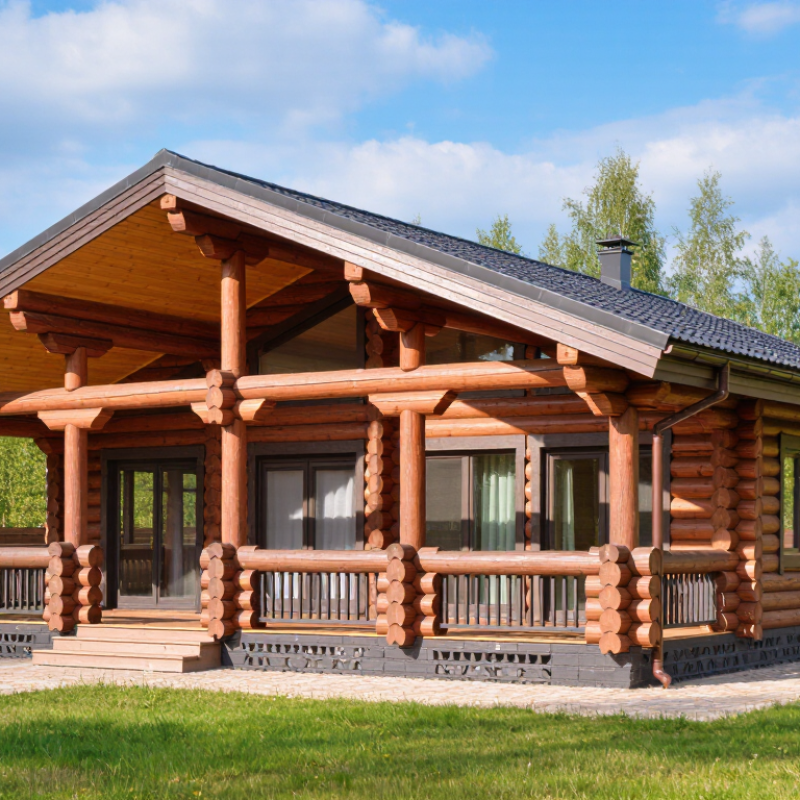
Defining Modern Log Cabin Styles and Construction Methods
Choosing a modern log cabin from China begins with the wall system, not the glossy rendering. Modern styles usually combine clean rooflines, large glazing, and exposed timber with restrained interiors. The logs may be full-round, square-milled, or laminated. Each choice changes shrinkage, thermal bridging, and maintenance. Full logs feel authentic. They also demand careful settling details around windows and doors. Square profiles simplify cladding and furniture installation.
Construction method matters more than appearance. A solid-log wall stores heat, but its joints must resist wind-driven rain. A post-and-beam frame allows wider glass openings, while insulated panels can deliver more predictable U-values. Factory prefabrication can improve cutting accuracy and reduce site waste, although transport damage and rushed assembly remain real risks. Grand View Research valued the global modular construction market at about USD 91.7 billion in 2022, with a projected 6.1% CAGR through 2030. That growth supports factory-built methods, not automatic quality. Ask for moisture readings, structural drawings, fastener schedules, and third-party inspection records.
Energy performance deserves a hard look. The UNEP GlobalABC 2023 report states that buildings and construction produce about 37% of global energy-related emissions. Specify continuous insulation, tested windows, roof ventilation, and an airtightness target. Do not accept “natural insulation” as a performance number. Request kiln-drying records and measured moisture levels before shipment. I would inspect one completed wall corner, especially the sill and roof junction. A perfect sample can hide weak detailing. That is where confidence should slow down.
How to Choose the Best Modern Log Cabin from China?
Defining Modern Log Cabin Styles and Construction Methods
The chart compares typical wall systems used in modern log cabins. Solid-log walls generally use thicker timber sections, while insulated timber-frame and SIP systems achieve lower thermal transmittance with less structural wall thickness. U-values shown are indicative calculations for wall materials only and do not include windows, doors, thermal bridges, interior finishes, or local climate requirements. Always confirm the final specification against the building code of the installation region.
Assessing Site Conditions, Space Needs, and Intended Use
Choosing a modern log cabin from China begins with a careful site assessment. Measure access roads, slope, soil, drainage, and daily sunlight. A narrow road may prevent delivery trucks from reaching the plot. Soft ground can also increase foundation costs. Check local wind, snow, rain, and temperature records before selecting wall thickness and insulation. These details matter more than attractive exterior images.
Space needs should match real routines, not imagined lifestyles. Sketch furniture placement for sleeping, cooking, storage, and working. Leave clear paths around doors and heating equipment. A compact cabin may suit weekend use, but full-time living usually requires stronger insulation, better ventilation, and larger utility areas. Intended use changes almost every specification. A rental cabin may need durable flooring and easy maintenance. A private retreat may prioritize windows and quiet views.
Ask the supplier for structural drawings, material specifications, installation guidance, and quality inspection records. Confirm which components are included, such as windows, wiring, plumbing, and roof finishes. Independent checks are valuable when possible. Small omissions can become expensive surprises. Do not rely only on computer renderings. A cabin can look spacious online and feel restrictive on site. Recheck measurements, delivery limits, and assembly requirements before placing an order. Even a well-prepared plan may need revision after the ground is opened. That is normal. The best decision balances the land, the household, and the cabin’s actual purpose.
Comparing Materials, Energy Efficiency, and Structural Quality
How to Choose the Best Modern Log Cabin from China?
Comparing Materials, Energy Efficiency, and Structural Quality
Choosing a modern log cabin from China requires more than attractive photographs. Material selection affects durability, comfort, maintenance, and indoor air quality. Look closely. Solid timber offers a natural appearance, while engineered wood can provide more consistent dimensions. Ask for timber moisture readings, kiln-drying records, and clear structural drawings. Wood that arrives too wet may shrink after installation. That problem is easy to underestimate.
Energy efficiency depends on the complete building envelope. Thick walls alone do not guarantee low heating costs. Check insulation type, roof insulation, floor protection, window glazing, and airtightness details. Small gaps matter. Pay special attention to corners, window frames, and roof connections, where thermal bridges often appear. A cabin with efficient insulation may still feel cold if doors fit poorly. Request thermal calculations based on your local climate, not a general product sheet.
Structural quality deserves practical verification. Confirm the foundation requirements, roof load capacity, connection hardware, and resistance to local wind or snow conditions. Factory quality control should include dimensional checks and documented inspections. On site, inspect timber joints, drainage paths, sealants, and fasteners before closing the walls. During a previous evaluation, I noticed that a visually impressive cabin had weak flashing around one window. It was a small detail, but water damage could become expensive. No checklist is perfect. Reflect on maintenance access, future repairs, and the skills available for local assembly.
Evaluating Chinese Manufacturers, Certifications, and Customization Options
Choosing a modern log cabin from China requires more than comparing online prices. The manufacturer’s quality system matters. ISO’s 2023 Survey identifies China as the largest national holder of ISO 9001 certificates, but certification alone proves limited performance. Ask for the certificate number, issuing body, production scope, and latest audit status. Then compare factory records with physical evidence, such as moisture readings, timber grading marks, and documented load tests.
Compliance must match the destination country. CE marking may apply to electrical products, but it does not automatically approve an entire cabin. Request structural calculations, fire classifications, insulation data, and installation drawings based on local building rules. FSC chain-of-custody documentation can strengthen timber traceability. The IEA reports that buildings consume about 30% of global final energy and create roughly 26% of energy-related emissions, so insulation deserves serious attention. Check wall thickness, roof insulation, window U-values, and airtightness details.
Customization should be measured, not merely advertised. A reliable supplier can provide revised drawings for room sizes, snow loads, wind exposure, roof pitch, doors, wiring, and plumbing routes. I would ask for a sample wall section before signing. Small errors become expensive at the site. Factory photographs help, but independent inspection is stronger. One weakness remains: translated certificates and polished renders can hide gaps between design and delivery. Specify tolerances, packaging, replacement parts, inspection rights, and acceptance criteria in writing.
Calculating Costs, Delivery Requirements, and Installation Support
Choosing the best modern log cabin from China requires more than comparing factory prices. Request a complete cost sheet covering the cabin kit, packaging, inland transport, export handling, sea freight, insurance, customs duties, local delivery, foundation, and installation. The quote is not the total.
UNCTAD’s Review of Maritime Transport 2024 reported that global seaborne trade grew by 2.4% in 2023. That growth can tighten vessel capacity and change freight prices. Ask for both a current shipping estimate and a validity period. A 40-foot container may look sufficient, but roof panels, insulation, windows, and protective crates can consume space quickly. Measure twice.
Installation support also affects the final budget. Confirm whether drawings include foundation details, electrical routes, plumbing openings, weatherproofing, and roof assembly. The International Energy Agency reports that buildings account for about 30% of global energy demand, so insulation quality deserves serious cost attention. A cheaper cabin may need thicker insulation in cold regions or better ventilation in humid climates.
Request a parts list with weights, dimensions, connection details, and replacement procedures. Remote video guidance can reduce travel costs, but it cannot replace skilled local supervision for foundations and structural alignment. Delivery dates should include manufacturing, inspection, port handling, customs clearance, and possible weather delays. My own practical concern is simple: many buyers budget for the cabin, then discover site preparation costs too late. Leave a contingency of roughly 10–15%, and treat that figure as an estimate, not a promise.