How to Choose the Best Aluminum Composite Panel Exporter?
Choosing the right Aluminum Composite Panel Exporter requires more than comparing prices on a spreadsheet. It demands evidence of manufacturing capability, material consistency, export experience, and responsive technical support. In real projects, small differences matter: a warped panel can disrupt façade alignment, while uneven coating may become visible under afternoon sunlight. The exporter must understand these practical risks.
Industry research supports this careful approach. Grand View Research’s Aluminum Composite Panels Market report identifies construction, renovation, and architectural applications as major demand drivers. MarketsandMarkets also highlights the importance of fire performance, surface finishes, lightweight construction, and application-specific specifications. These findings suggest that a reliable supplier should provide more than attractive samples. It should explain core composition, aluminum thickness, coating system, panel flatness, fire classification, and production tolerances in clear technical language.
Documentation matters.
A professional Aluminum Composite Panel Exporter should offer traceable test reports, batch records, installation guidance, and references from comparable projects. Buyers should verify whether certificates apply to the exact panel structure, not merely to a similar product. Factory audits, sample testing, and a review of packaging details can reveal weaknesses before shipment. A container may travel thousands of miles; poor corner protection can damage otherwise acceptable panels.
Report forecasts vary because market definitions and regional data differ. That limitation deserves attention. Therefore, selecting an exporter should combine published industry evidence with direct verification. Ask precise questions, inspect physical samples, and evaluate how honestly the supplier discusses limitations. The lowest quotation may not represent the lowest project cost. Reliability is often visible in the details.
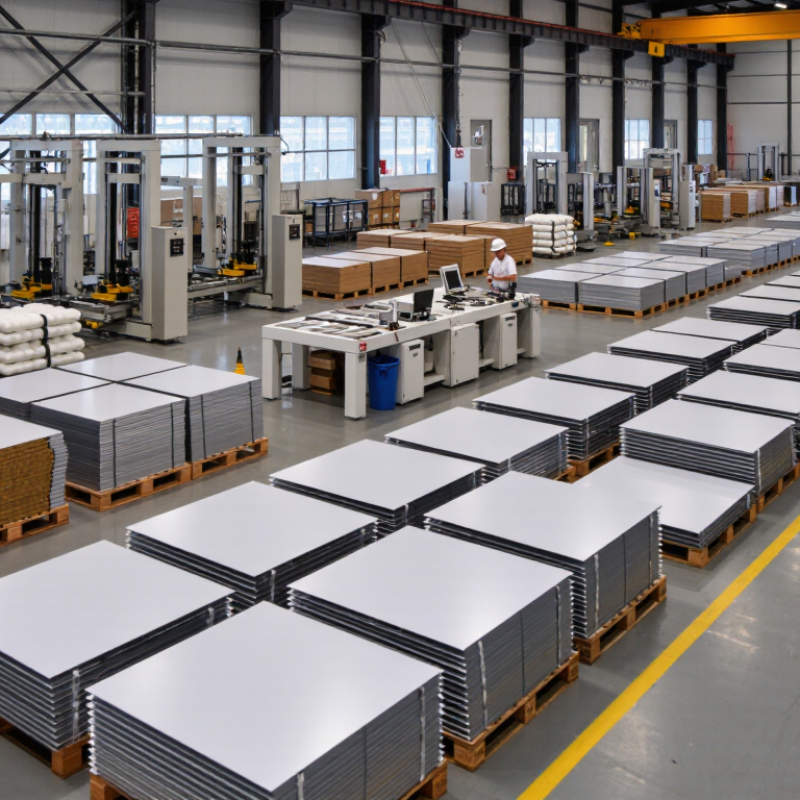
Define Your Aluminum Composite Panel Project Requirements
How to Choose the Best Aluminum Composite Panel Exporter?
Define Your Aluminum Composite Panel Project Requirements
Define your aluminum composite panel project requirements before comparing exporters. Record the building location, façade area, panel dimensions, and installation schedule. Climate matters. Coastal projects may require stronger corrosion resistance and carefully selected protective coatings.
Specify the panel thickness, aluminum skin thickness, core type, surface finish, and desired color. Confirm the required fire performance and applicable building standards with your project engineer. Also list wind-load data, substrate conditions, bending needs, joint details, and edge treatments. Small omissions can create expensive changes later.
Ask exporters for technical datasheets, test reports, sample panels, production tolerances, and packaging details. Check whether their documents match your local requirements. A reliable exporter should explain limitations instead of promising everything. My early project estimates were too optimistic because I ignored unloading space and panel storage. That mistake delayed installation.
Request a clear quotation that separates panel costs, fabrication, accessories, testing, shipping, and insurance. Confirm lead times using your actual quantity and cutting plan. Ask how damaged panels are reported and replaced. Photographs, inspection records, and batch references can improve accountability. Review the warranty language carefully, especially for color fading, coating adhesion, and handling damage. If the exporter avoids precise answers, pause before placing the order.
Verify the Exporter’s Product Quality and Technical Standards
A reliable aluminum composite panel exporter should prove quality with documents, not attractive samples. Request the product datasheet, mill certificates, coating specifications, and recent independent laboratory reports. Check aluminum skin thickness, alloy grade, core density, panel flatness, and peel strength. ASTM D1781 can help assess bond performance, while ASTM E84 evaluates surface-burning characteristics. For European projects, ask for fire classification under EN 13501-1. Certificates should identify the tested construction, not merely the exporter.
Look closely at coating durability. AAMA 2605 requirements, or an equivalent specification, can indicate stronger resistance to weathering, chalking, and color change. Verify testing conditions, exposure hours, and acceptance limits. A certificate alone can still mislead. Match its batch number with the shipment and inspect random panels for scratches, edge separation, waviness, and uneven gloss. The International Aluminium Institute’s Aluminium Sector Greenhouse Gas Pathways to 2050 report notes that recycled aluminium uses roughly 5% of the energy required for primary aluminium production. That figure supports sustainability checks, but recycled content must not replace structural and fire-performance evidence. I would still question any unusually low quotation.
Tips: Ask for three recent test reports, not one old certificate. Confirm the laboratory’s accreditation and test date. Cut a sample edge yourself. Look for voids, weak bonding, or a core that crumbles easily. Record panel dimensions before installation. Small deviations can become visible across a large façade.
Compare Pricing, Shipping Terms, and International Delivery Support
How to Choose the Best Aluminum Composite Panel Exporter?
Choosing an aluminum composite panel exporter requires more than comparing the unit price. A low quotation may exclude packing, port handling, or document fees. I once focused on the panel price and underestimated inland transport costs. That mistake changed my purchasing checklist.
Request a detailed quotation with panel thickness, coating type, core specification, quantity, and packaging included. Compare the total delivered cost, not only the factory price. Ask whether the offer uses EXW, FOB, CIF, or DDP terms. These conditions affect insurance, customs responsibility, and unexpected charges. A reliable exporter explains each term clearly and provides a realistic production schedule. Very low prices deserve careful questions.
International delivery support matters just as much. Confirm the exporter’s experience with your destination port and required shipping documents. Check how panels are protected against moisture, scratches, and edge damage during long voyages. Strong exporters share packing photos, inspection records, and loading details before dispatch. They should also provide tracking updates and respond quickly when schedules change. Ask for references from comparable overseas projects. Real experience shows in specific answers.
Do not ignore small details. A missing certificate or incorrect package count can delay clearance. I still find it useful to confirm every document twice, because assumptions create expensive problems. A responsive export team can help coordinate freight agents, customs brokers, and local delivery partners. That support often matters more than a slightly lower quotation.
When comparing Aluminum Composite Panel Exporters, review both the quoted panel price and the responsibilities included in the shipping term. Under Incoterms® 2020, EXW places most transport obligations on the buyer, while DDP gives the seller the broadest delivery responsibility. Confirm freight, insurance, customs clearance, duties, delivery time, and destination charges before selecting the lowest quote.
Review Communication, Warranty Policies, and Exporter Reliability
How to Choose the Best Aluminum Composite Panel Exporter?
Communication often reveals an exporter’s real working habits. McKinsey’s 2024 B2B Pulse reports that buyers now use an average of ten interaction channels. A reliable exporter should manage email, video calls, drawings, and shipment updates consistently. Ask for a named contact, response-time commitment, and written confirmation of panel specifications. Vague replies create expensive mistakes later. I have found that fast answers are not enough; technical answers must also match test reports, production records, and packing details.
Warranty policies deserve careful reading, not polite acceptance. Check the warranty period, coating performance, color variation, delamination coverage, and claim procedure. Ask who pays inspection and replacement costs. Request clear exclusions for installation, storage, cutting, and unusual exposure. ASTM D1781 peel-strength results and fire-performance documents can support technical claims, but they do not replace a practical warranty. A long warranty can still be weak.
Exporter reliability needs evidence across several shipments. The ISO Survey 2023 recorded more than 1.2 million ISO 9001 certificates worldwide, yet certification alone cannot prove dependable export service. Review recent batch records, container photographs, packing lists, and independent inspection options. The World Bank Logistics Performance Index 2023 evaluated logistics performance across 139 economies, emphasizing tracking, timeliness, and shipment reliability. Compare those qualities with the exporter’s actual records. A perfect reference list may hide poor follow-up. Speak with recent customers, and ask how quickly problems were handled, not merely whether delivery arrived.