2026 Top Exterior Doors What Are the Best Types?
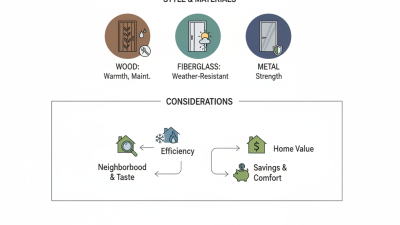
Choosing an exterior door in 2026 involves more than matching a home’s paint color. The right door must handle rain, sunlight, temperature changes, daily use, and security concerns. It should also support the architectural character of the property. A solid fiberglass door may suit a busy family entrance, while insulated steel can provide dependable strength and energy performance. Wood remains attractive, but it demands careful sealing and regular inspection.
Small details matter. Look at the frame, weatherstripping, threshold, hinges, and lock system. A beautiful slab cannot compensate for air leaks around its edges. In coastal areas, corrosion-resistant hardware can prevent early failure. In colder climates, a thermally efficient core may reduce drafts near the entryway. Professional installers often check wall alignment and moisture exposure before recommending a specific model.
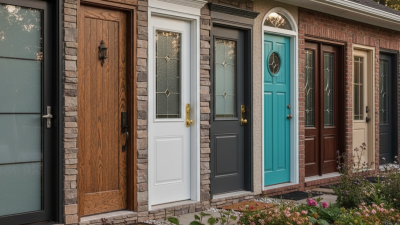
There is no universal winner. Not even close. Material quality, local weather, maintenance habits, and budget change the answer. This guide compares the leading exterior doors for 2026, including fiberglass, steel, wood, aluminum, and modern composite options. It considers durability, insulation, appearance, maintenance, accessibility, and long-term value. Some claims in door marketing sound impressive but deserve closer testing. A trusted manufacturer’s ratings and a qualified installer’s assessment are more useful than a glossy showroom promise. The phrase “exteriors doors” is often used online, but the real goal is simple: select an entry system that performs reliably and feels right every day.
Exterior Door Performance: Compare NFRC U-Factor, R-Value, and Air Leakage
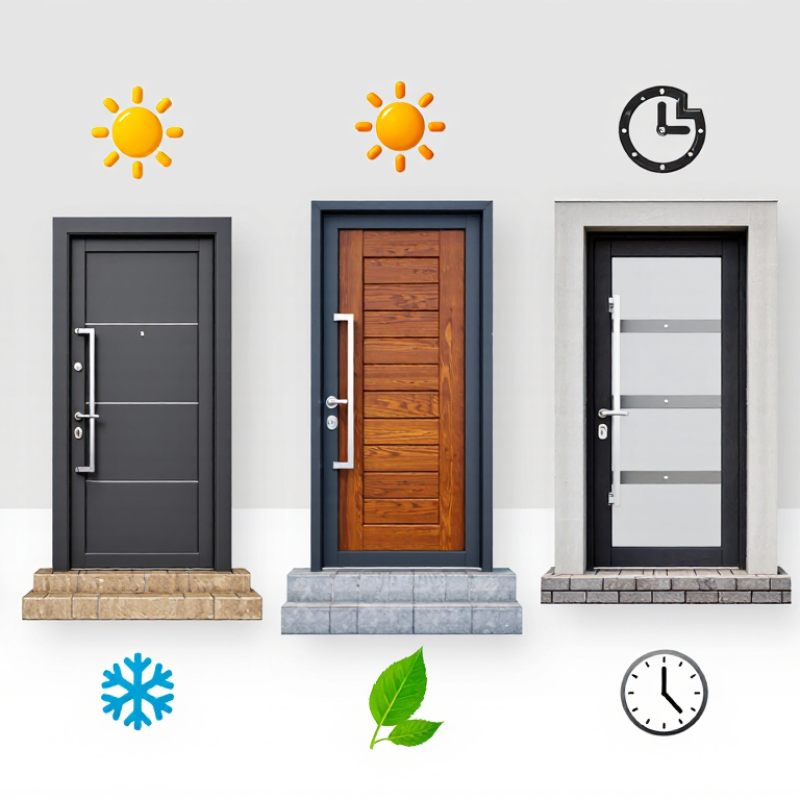
For 2026 exterior doors, compare performance numbers before choosing materials. Insulated steel and fiberglass doors often provide stronger thermal control than solid wood doors. However, installation quality can change real-world results.
The NFRC label reports U-factor, solar heat gain coefficient, and air leakage. U-factor measures heat transfer. Lower values mean better insulation. R-value describes resistance to heat flow, but door ratings rarely use it consistently. As a rough comparison, R-value equals the inverse of U-factor under compatible testing conditions. Do not treat that conversion as a perfect field result. Frames, glass panels, and edge seals still matter.
NFRC 100 defines U-factor testing, while NFRC 400 covers air-leakage testing. Air leakage is reported in cubic feet per minute per square foot at a standard pressure difference. Lower leakage usually means fewer drafts and less energy waste. The U.S. Department of Energy identifies air sealing as a major factor in reducing heating and cooling demand. ENERGY STAR criteria also favor efficient door assemblies, not attractive slabs alone. A perfect label cannot repair a poorly adjusted threshold.
Tips: Ask for the complete NFRC label, not only an advertised R-value. Check the door, frame, weatherstripping, and sill as one assembly. On a windy day, inspect the lower corners with a thin tissue. Small movement can reveal leakage. Recheck the seal after seasonal expansion, because installation assumptions are sometimes wrong.
Steel Entry Doors: Insulated Cores Can Reach About R-5 With Low Upkeep
For 2026, steel entry doors remain a practical choice for many exterior entrances.
An insulated core can reach about R-5, depending on construction and testing. That rating helps slow heat transfer through the door panel. It does not describe the entire doorway. The frame, threshold, and weatherstripping also matter.
During home inspections, I look for a firm seal around all four edges. Cold air often enters at the threshold, not through the steel face. A properly adjusted latch compresses the weather seal evenly. Foam-filled or polyurethane cores usually provide better insulation than hollow panels. The surface resists warping and needs little routine care. A clean cloth and occasional finish inspection are often enough. Still, low upkeep does not mean no upkeep.
Scratches exposing metal should be repaired before moisture reaches the underlying material. Coastal and wet locations deserve closer attention. Professional installation can prevent gaps, bowed frames, and difficult locking. I once underestimated a small threshold gap; the room felt colder despite a strong door panel. That experience changed how I judge performance. Ask for the tested door assembly, not only the advertised R-value. Confirm the core, frame material, glass area, and installation method.
Fiberglass Doors: Foam Cores, Moisture Resistance, and ENERGY STAR Ratings
Fiberglass exterior doors combine a durable skin with a rigid foam core, usually polyurethane or polystyrene. The core reduces heat transfer through the door panel. The U.S. Department of Energy’s Building America guidance reports insulated door assemblies commonly reaching about R-5 to R-7, depending on construction and glazing.
That number is not the whole story. A well-insulated panel can still perform poorly when weatherstripping is compressed, the threshold is misaligned, or the frame lacks continuous insulation. I have seen moisture damage begin at the lower corner, not the center panel. Fiberglass resists swelling and rotting better than wood, but it is not waterproof. Poor flashing still creates trouble.
ENERGY STAR certification adds a useful screening tool. Certified doors must meet climate-specific U-factor and solar heat gain requirements, with performance verified through National Fenestration Rating Council procedures. Lower U-factor generally means less heat loss. For a practical comparison, read the NFRC label, inspect the sill drainage path, and check the installation instructions. ENERGY STAR’s 2024 criteria also recognize that glass area changes performance significantly. More daylight can mean more solar gain. That trade-off deserves attention.
Wood Exterior Doors: Solid Construction, FSC Options, and Seasonal Maintenance
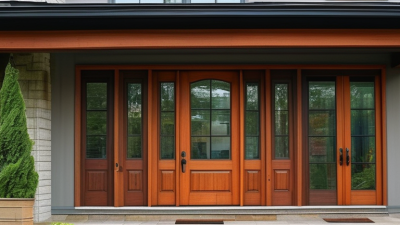
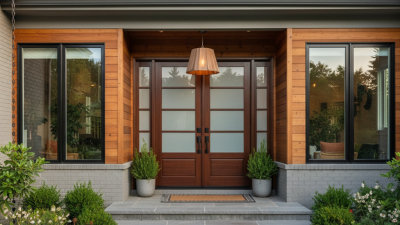
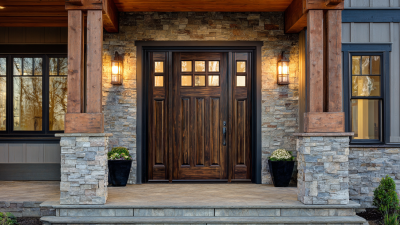
Wood exterior doors remain a strong choice for homes needing warmth, strength, and repairability. Solid construction helps reduce hollow sounds and gives the door a substantial, stable feel. However, “solid wood” does not mean maintenance-free. Moisture can still enter through unsealed edges, joints, or the bottom rail.
During inspections, I look closely at the lower corners and threshold. These areas often show swelling first, especially after repeated rain and freezing weather. A well-fitted door should open smoothly without scraping. Small gaps may appear as temperatures change, but large gaps can signal poor alignment or moisture movement. I have seen beautiful doors fail early because the top edge was never finished properly.
FSC-certified wood can support responsible forestry when the certification and supply chain are verified. Ask for documentation rather than relying on a label alone. Wood species also matter; dense species may resist wear, while softer species can dent more easily. Seasonal care is simple but easy to postpone. In spring, wash the surface gently and inspect the finish for cracks. Before winter, seal exposed edges and refresh worn areas with a compatible exterior coating. Avoid trapping moisture under peeling layers. Sometimes, replacement seems easier than repair, but that choice deserves a closer inspection.