Login

Skyview  >  Login

2026 Best Types of Aluminum Doors for Global Buyers

Choosing the right aluminum doors in 2026 requires more than comparing prices and finishes. Global buyers must assess climate, building use, security needs, and installation conditions.

A coastal hotel may need corrosion-resistant aluminum doors with marine-grade coatings. A cold-climate warehouse may require thermally broken frames and insulated glass. For offices, slim-profile systems can improve daylight without sacrificing strength. Homes may benefit from sliding, folding, hinged, or pivot designs, depending on space and daily movement.

Details matter.

This guide examines the leading types of aluminum doors available to international buyers. It considers frame construction, thermal performance, glazing options, hardware quality, surface treatments, maintenance, and supplier reliability. These factors influence comfort, service life, and long-term project costs.

Practical experience shows that attractive samples can hide weak drainage, poor seals, or unsuitable accessories. A low quotation may also exclude packaging, testing, installation guidance, or replacement parts. Buyers should request verified specifications, project references, sample approvals, and clear warranty terms before ordering.

Not every popular design suits every market. That is easy to overlook.

Regional standards, wind exposure, humidity, and local installer skills can change the best choice. Product names may also differ between suppliers, creating confusion during comparison. This overview offers a practical framework for evaluating aluminum doors with greater confidence, while recognizing that final decisions should follow professional site assessments and current regional requirements.
2026 Best Types of Aluminum Doors for Global Buyers

Aluminum Door Types and Their Core Structural Differences

2026 Best Types of Aluminum Doors for Global Buyers

Aluminum Door Types and Their Core Structural Differences

Aluminum doors differ mainly in how the frame carries weight, guides movement, and seals against weather. Hinged doors use side hinges, a reinforced jamb, and a threshold that supports daily impact. They suit entrances where a firm closing pressure matters. Their clear opening is usually smaller than the door leaf width.

Sliding doors transfer weight to rollers inside a top or bottom track. Good rollers reduce operating force, even with large glass panels. However, a poorly aligned track can collect dust and create uneven movement. Buyers should inspect roller access, drainage holes, and frame stiffness rather than focusing only on appearance.

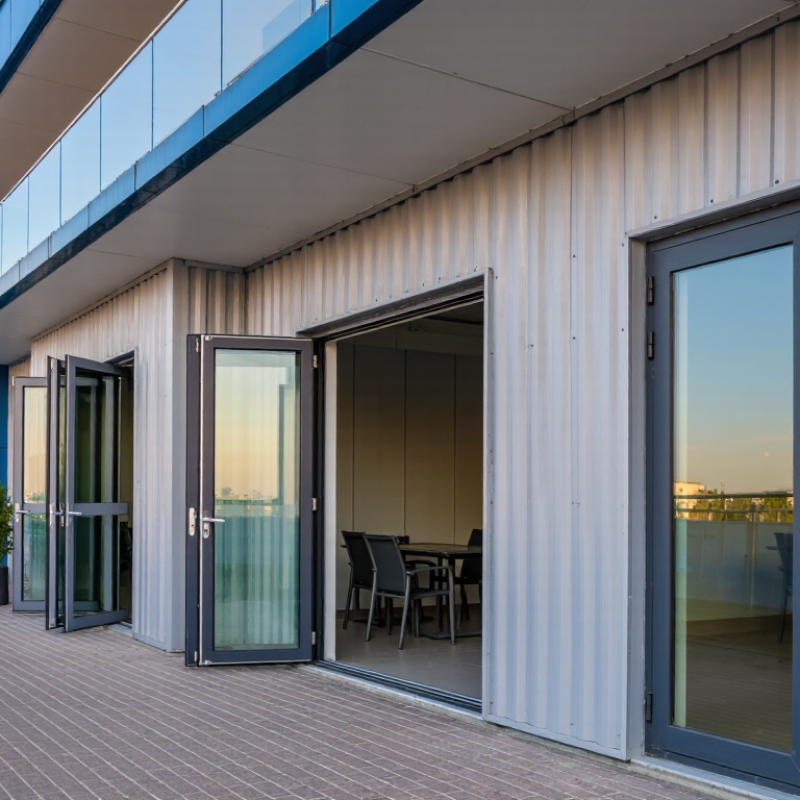
Folding doors connect several leaves with hinges and running carriages. They create a wide opening, but each joint adds adjustment points and potential air leakage. Lift-and-slide systems use a handle-driven mechanism to raise the panel slightly before movement. This reduces friction and supports heavier glazing, though replacement hardware may be less convenient in distant markets.

Thermally broken frames include an insulating strip between inner and outer aluminum sections. This limits heat transfer and reduces surface condensation in suitable climates. Non-thermal frames are simpler and often lighter, but they can feel cold or hot indoors. Specification sheets sometimes hide practical weaknesses. Check wall thickness, corner joints, gasket material, drainage design, and tested air and water performance before comparing prices.

2026 Best Types of Aluminum Doors for Global Buyers

Aluminum Door Types and Their Core Structural Differences

How to read this chart: A value of 1 indicates that the structural element is typically present in the corresponding aluminum door configuration. A value of 0 indicates that it is generally not a defining component. Actual systems may vary according to opening size, wind-load requirements, thermal performance, and project specifications.

Key differences: Hinged doors primarily use hinges for swing movement, while sliding and lift-and-slide doors depend on roller carriages and interlocking meeting stiles. Folding doors combine hinges, rollers, and multi-panel linkages. Pivot doors use dedicated pivot hardware rather than conventional side hinges and are commonly selected for wide, statement entrances.

How to Compare Aluminum Doors by Use, Design, and Performance

2026 Best Types of Aluminum Doors for Global Buyers

How to Compare Aluminum Doors by Use, Design, and Performance

Aluminum doors should match the building’s actual use, not only its appearance. A shop entrance may need wide sliding panels, clear glass, and smooth daily operation. An apartment balcony may benefit from hinged doors with stronger weather seals. For busy offices, check hinge cycles, handle quality, and replacement access. Measure twice. Small errors can create expensive installation problems.

Design also affects comfort and maintenance. Slim frames bring in more daylight, while wider profiles can improve rigidity and thermal performance. Choose glass according to privacy, sunlight, noise, and safety needs. Dark finishes look modern, but they may show dust and scratches more clearly. Powder coating usually offers durable color, yet surface preparation still matters. Details matter.

Performance requires more than a product brochure. Compare air leakage, water resistance, wind-load ratings, hardware durability, and thermal values. Ask for test reports, installation drawings, warranty terms, and spare-part availability. Requirements can differ by climate and market, so local professionals should confirm applicable building rules. A coastal project needs careful corrosion protection. A cold region needs attention to thermal breaks and condensation control. Not every door works. Buyers should also review the installer’s experience, because even a well-designed door can perform poorly after uneven fixing, weak drainage, or incorrect adjustment. Some specifications look impressive but lack clear test conditions; that deserves a second look.

Key Materials, Finishes, Glass, and Hardware Options

Choosing aluminum doors for international projects requires more than comparing prices. Material grade, wall thickness, thermal performance, and fabrication quality affect service life. In coastal areas, corrosion-resistant aluminum finishes deserve close attention. Powder coating offers many colors and a durable surface, while anodizing creates a metallic look with visible texture. However, finish samples can appear different under sunlight. Always inspect a physical sample.

Glass selection should match climate, security needs, and indoor comfort. Double glazing can reduce heat transfer and outside noise. Low-emissivity glass helps control solar gain, but its value depends on orientation and local weather. Laminated glass improves impact resistance and keeps fragments attached after breakage. Tempered glass is stronger than ordinary glass, yet it cannot be cut after treatment. Small details matter.

Hardware should suit door weight, traffic frequency, and maintenance access. Stainless steel hinges and corrosion-resistant rollers are practical choices for humid locations. Multi-point locks may improve sealing and security when installed correctly. Poor alignment can defeat good hardware. I have seen beautiful doors fail because installers ignored drainage and frame tolerances. That is an uncomfortable lesson. Global buyers should request test reports, finish specifications, glass certifications, and installation guidance. Local building requirements still need independent verification. No supplier can replace a qualified site inspection.

Global Standards, Energy Efficiency, Security, and Weather Resistance

For global buyers, aluminum doors should be selected by climate, building use, and local standards. Hinged doors suit entrances requiring strong seals and controlled access. Sliding and lift-and-slide doors provide wider openings, but their tracks need careful drainage. Folding doors create flexible spaces, although more panels can mean more adjustment points.

Energy efficiency begins with thermally broken frames, low-conductivity spacers, and properly sealed glass. Look for documented U-values, air leakage results, and water penetration tests.

Standards vary by market, so ask for test reports matching the destination country. A door may perform well in a showroom yet struggle beside a windy coastline. Security also depends on laminated glass, multi-point locking, reinforced hinges, and a frame anchored to the structure. Hardware alone is not enough.

Tips: Match the opening direction with prevailing wind and rain. Check drainage channels before installation. Choose powder-coated or anodized finishes suited to humidity, salt, and strong sunlight. Inspect gaskets annually, especially after extreme weather. Do not assume thicker aluminum always means better performance. Poor installation can waste the best design. Some specifications remain unclear until a site survey confirms wall strength, exposure, and daily traffic.

How International Buyers Can Select Suppliers and Control Costs

Choosing aluminum doors for international projects requires more than comparing catalog prices. Sliding doors suit wide openings, while hinged doors often simplify installation. Folding systems create a larger opening but may require stronger hardware and careful alignment. Thermal-break frames can improve indoor comfort, especially in regions with strong seasonal temperature changes.

Supplier selection should begin with technical evidence. Request section drawings, alloy information, coating details, hardware specifications, and tested performance data. Ask how the supplier controls dimensional accuracy during production. A factory visit or independent inspection can reveal storage problems, weak packaging, or inconsistent assembly. Communication matters too. Slow replies may become expensive delays after payment. My first quote comparison was incomplete because I ignored replacement parts and installation guidance. That mistake changed my purchasing checklist.

Tips: Compare total landed cost, not only the unit price. Include tooling, samples, packaging, freight, duties, inspection, and local installation. Confirm minimum order quantities and production lead times in writing. Request a small sample order before a large shipment. Check whether replacement rollers, locks, and seals are readily available. Keep a written record of every technical change. Cheap doors can become costly when drawings change late. Yet premium specifications are not always necessary. Match performance to the building’s climate, usage, and maintenance capacity. A realistic budget leaves room for defects, delays, and currency movement. Allowing no contingency is risky.

2026 Best Types of Aluminum Doors for Global Buyers — How International Buyers Can Select Suppliers and Control Costs
Door Type Typical Applications Common Configuration Indicative Thermal Performance Indicative Export Price Range
per Door Set (USD)
Typical Production Lead Time Cost-Control Priority Supplier Selection Checklist
Thermally Broken Hinged Door Residential entrances, apartments, hotels and low-rise commercial buildings in moderate or cold climates. Single or double leaf; insulated aluminum profiles; insulated glass unit; multipoint lock option. Typical whole-door U-value: approximately 1.2–2.0 W/m²·K, depending on profile, glass and size. Approximately $180–$650 for standard sizes; custom hardware, glass and finishes can increase the price. 30–60 days after approved drawings and deposit. Medium
Optimize glass specification, hardware level and standard dimensions.
Request profile section drawings, thermal-break material details, air/water test reports and hardware specifications.
Aluminum Sliding Patio Door Balconies, patios, villas, apartments and residential projects requiring wide openings. Two, three or four panels; lift-and-slide or standard sliding operation; single or double glazing. Typical whole-door U-value: approximately 1.4–2.6 W/m²·K; performance varies significantly by system design. Approximately $350–$1,400 per set, excluding unusual oversize dimensions and premium glass. 35–70 days after final approval. Medium
Standardize panel sizes and avoid unnecessary oversized glass.
Check roller load capacity, drainage design, locking points, track replacement access and wind-load calculations.
Aluminum Bifold Door Luxury residences, restaurants, hospitality projects and spaces requiring large clear openings. Three to eight leaves; inward or outward folding; top-hung or bottom-rolling systems. Typical whole-door U-value: approximately 1.4–2.4 W/m²·K when using thermally broken profiles and insulated glass. Approximately $700–$3,000 per set, depending on leaf count, width, hardware and glass. 45–75 days after approved shop drawings. High
Control leaf count, hardware grade, glass thickness and installation tolerances.
Verify maximum panel dimensions, operating-force tests, corner-post options, weather seals and spare-hardware availability.
Aluminum Lift-and-Slide Door High-end residential, coastal properties, premium hotels and large glazed openings. Large sliding panels; recessed or raised tracks; multipoint locking; thermally broken frame. Typical whole-door U-value: approximately 1.0–1.8 W/m²·K with suitable low-emissivity insulated glass. Approximately $1,000–$4,500 per set, with large panels and special glass at the upper end. 50–90 days after engineering confirmation. High
Confirm structural sizing, panel weight, glass composition and installation method early.
Request panel-weight limits, deflection calculations, water-tightness data, roller specifications and track details.
Aluminum French Door Residential entrances, balconies, terraces, hotels and traditional-style commercial projects. Double hinged leaves; fixed or active sidelights; insulated glass; optional low threshold. Typical whole-door U-value: approximately 1.3–2.2 W/m²·K, depending on frame depth and glazing. Approximately $300–$1,100 per set, excluding decorative hardware and special finishes. 30–60 days after order confirmation. Low to Medium
Use standard frame sizes and locally available glass dimensions.
Check hinge adjustment, threshold drainage, sash alignment, security hardware and opening-direction requirements.
Aluminum Fire-Rated Door Commercial buildings, corridors, plant rooms, public buildings and regulated escape routes. Single or double leaf; fire-rated glazing or solid infill; closer, panic hardware and smoke seals. Fire resistance is commonly specified as 30, 60 or 90 minutes, subject to a tested doorset configuration. Approximately $500–$1,800 per set; certification, glazing and hardware have a major cost impact. 45–90 days, subject to certification and project approval. High
Do not substitute profiles, glass or hardware without confirming certification validity.
Verify test reports, certification scope, compatible hardware, labeling requirements and local code acceptance.
Aluminum Security Door Entryways, apartments, offices, schools, retail premises and buildings requiring increased resistance to forced entry. Reinforced aluminum frame; laminated or security glass; multipoint lock; concealed or heavy-duty hinges. Security performance depends on the complete tested doorset; glass and lock selection are critical. Approximately $350–$1,500 per set, depending on resistance class, glazing and hardware. 40–75 days after approved technical specifications. Medium to High
Specify the required security class before comparing quotations.
Request complete doorset test evidence, lock-cylinder details, laminated-glass composition and anchoring requirements.
Aluminum Louvered or Ventilated Door Mechanical rooms, electrical rooms, utility areas, plant enclosures and ventilation openings. Fixed or adjustable louvers; single or double leaf; insect screen or weather hood option. Thermal insulation is generally limited; airflow is normally prioritized over energy efficiency. Approximately $120–$600 per set, depending on louver profile, size and finish. 20–45 days for standard designs. Low
Use standard louver modules and confirm airflow requirements before ordering.
Check free ventilation area, rain penetration resistance, corrosion protection and maintenance access.
Buyer control notes: Price ranges are indicative planning values for standard aluminum doors and door sets, excluding freight, duties, installation, taxes, unusual packaging, project engineering and local certification. Final cost is affected by door size, aluminum alloy and profile depth, thermal-break design, glass specification, finish, hardware, order quantity, Incoterms, destination requirements and compliance testing. Before placing an order, compare suppliers using the same approved drawings, bill of materials, performance requirements, packaging standard and delivery terms.