
10 Tips for Buying Front Entry Doors?
Choosing front entry doors is not only about creating a welcoming first impression. The right door must also protect your home, manage weather, and support daily comfort.
A practical buying decision begins with the opening itself. Measure the width, height, and depth carefully, including the frame and threshold. A beautiful door will not perform well if it fits poorly. Consider your local climate, too. Heavy rain, strong sunlight, freezing temperatures, and coastal air can affect materials differently.
This guide presents ten useful tips for comparing front entry doors with greater confidence. It covers materials, energy efficiency, security hardware, glass, maintenance, and professional installation. Look for verified performance information, such as insulation ratings, warranty terms, and tested lock specifications. Manufacturer details matter, but real installation conditions matter just as much.
Small details can cause big problems. A low threshold may improve accessibility, yet it can require better drainage outside. Decorative glass can brighten a hallway, although privacy may become an issue at night. Steel doors often provide strength, while fiberglass can resist moisture and temperature changes. Wood offers warmth and character, but it may need regular sealing.
There is no perfect choice.
Even experienced homeowners can overlook door swing direction, trim clearance, or seasonal expansion. I have found that the most reliable decisions come from comparing measurements, climate needs, budget, and long-term upkeep together. Use these tips as a careful starting point, then confirm technical details with a qualified installer before ordering.
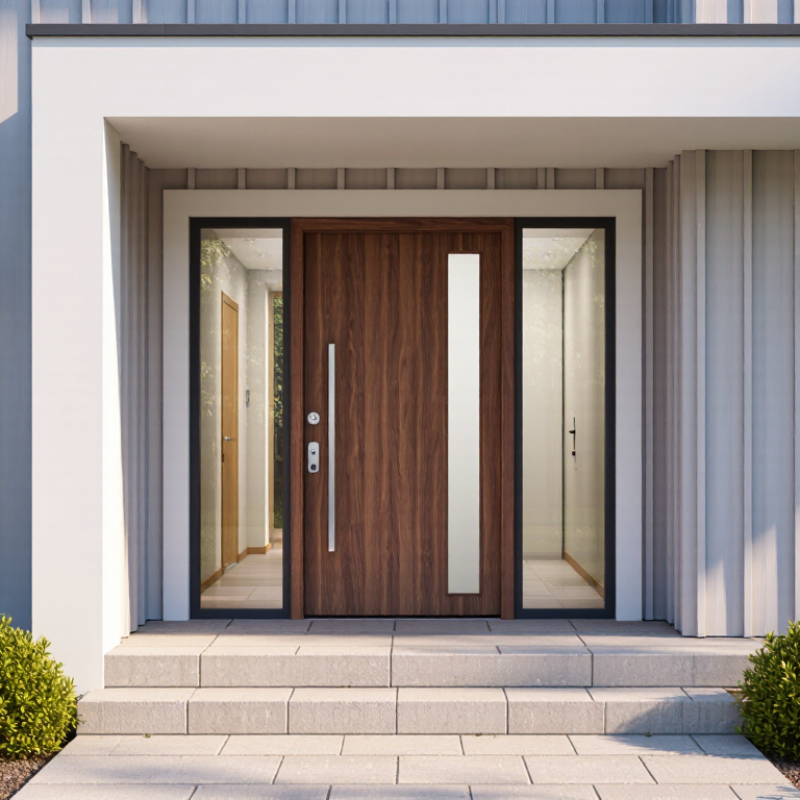
Define Your Home’s Entry Needs and Doorway Measurements
Define Your Home’s Entry Needs and Doorway Measurements
Before choosing a front entry door, define how your household uses the entrance. Consider security, weather exposure, daylight, accessibility, and daily traffic. A covered porch may allow a wider glass panel, while a wind-facing entrance may need stronger weather sealing. Measure twice.
Measure the existing opening at the top, middle, and bottom. Record the smallest width. Then measure height on both sides and at the center. Check the jamb depth, threshold condition, wall thickness, and floor slope. Do not measure only the visible door slab. The rough opening may be uneven, especially in older homes. Leave room for shimming and insulation.
A prehung unit needs accurate rough-opening measurements, while a replacement slab depends on hinge locations and edge details. Check the swing direction and nearby walls, furniture, stairs, and delivery paths. The U.S. Department of Energy’s Residential Energy Consumption Survey reports that heating and cooling use roughly half of household energy. A poorly sealed entry can undermine comfort. The 2024 Cost vs. Value Report also places steel entry-door replacement among high-return exterior projects, with a reported 188.1% national cost recoupment. Treat that figure carefully; local labor and opening repairs can change the result. Measure the actual opening before trusting any estimate.
| Tip | Entry Need to Define | What to Measure or Check | Useful Standard or Typical Range | Why It Matters |
|---|---|---|---|---|
| 1 | Confirm the required door size | Measure the existing door slab, then verify the rough opening behind the frame. | Common single door slabs are 30, 32, or 36 inches wide and about 80 inches high. | Door-slab size and rough-opening size are different. A replacement door must fit the frame or the prepared opening. |
| 2 | Measure the rough opening accurately | Record the width at the top, middle, and bottom, and the height on both sides and in the center. | Use the smallest recorded width and height when checking fit. | Openings can be slightly out of square or vary from one point to another, especially in older homes. |
| 3 | Choose the correct handing and swing | Stand outside facing the door. Note which side has the hinges and whether the door opens inward or outward. | Inswing doors are common for residential entries; local codes may affect outswing use. | Incorrect handing can interfere with walls, furniture, stairs, locks, or nearby doors. |
| 4 | Check jamb depth and wall thickness | Measure from the interior trim edge to the exterior trim edge, or measure the wall thickness at the opening. | Common jamb depths include approximately 4 9/16 inches and 6 9/16 inches, depending on wall construction. | The jamb must align with the wall so the interior and exterior trim can be installed correctly. |
| 5 | Plan for threshold and floor clearance | Check the finished floor height, threshold height, landing depth, and clearance for the door sweep. | A level landing is generally preferred; accessibility projects may require a low or beveled threshold. | Flooring changes can prevent the door from opening fully or create a trip hazard. |
| 6 | Match the door to the local climate | Consider rain, humidity, temperature changes, direct sunlight, wind, and exposure to coastal air. | Look for weather-resistant finishes, adjustable weatherstripping, and a durable threshold suitable for the exposure. | Climate-appropriate materials and sealing help reduce swelling, drafts, moisture entry, and finish deterioration. |
| 7 | Set an energy-efficiency target | Review the whole door assembly, including the slab, glazing, frame, sill, and weatherstripping. | Compare the assembly’s U-factor and air-leakage information; lower U-factor generally indicates better insulation. | A well-sealed assembly can improve comfort and reduce unwanted heat transfer around the entry. |
| 8 | Evaluate security requirements | Check lock location, hinge protection, frame strength, strike reinforcement, and visibility from inside the home. | Use a properly reinforced frame and a deadbolt or multipoint system compatible with the door design. | Security depends on the complete door system, not only the lock or the door slab. |
| 9 | Decide how much glass is appropriate | Consider privacy, daylight, views, glare, impact exposure, and the location of the entry relative to the street. | Options range from solid slabs to partial or full-height glazing; safety glazing may be required in hazardous locations. | Glass affects daylight, privacy, energy performance, and safety. Verify applicable building-code requirements. |
| 10 | Allow for installation and future maintenance | Inspect the sill, subfloor, framing, exterior drainage, trim, and clearance for delivery and installation. | Keep the opening square, plumb, and level; follow the door manufacturer’s installation and sealing instructions. | Correct preparation helps prevent sticking, air leakage, water intrusion, and premature finish or hardware problems. |
Related Posts
-
China Best Front Entry Doors How to Choose?
-

Top 10 Front Doors in China for Global Buyers to Consider?
-
Top 10 Entry Doors and Windows Buyers Guide for Global Shoppers?
-
2026 Top Trends for Front Entry Doors What to Expect?
-
What Are the Best Entry Doors in 2026?
-
What is the Best Type of Entry Doors for Your Home? A Comprehensive Guide